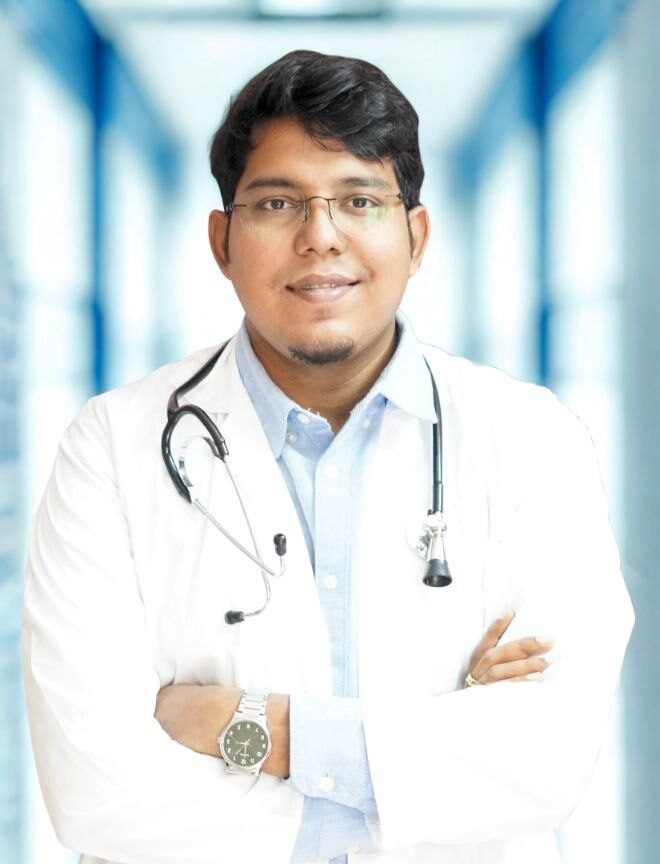
MBBS · MD (RADIATION ONCOLOGY)

Compassionate Care.

Evidence-Based

Healing.

CARE CURES CANCER.

Guiding patients through cancer treatment with compassion, humanity, clarity, medications and modifications — because we believe CARE CURES CANCER. You deserve both expertise and empathy on this journey.

Clinical Knowledge

Explore Our Knowledge Areas

Each topic below is a window into how we approach cancer care — with science, precision, and compassion at the centre of everything we do.

International Member of

International Member of
ASCO ASTRO CARO ABS AROI

Cancer is a battle, not just a diagnosis.

Personalised treatment plans built around your life, not just your disease. It involves not only you, but also me, my team, and your family. So it will always be 'our' story.

This battle needs patience, faith and compassion. For any guidance or question — we are just a call away.

Scientific approaches you can trust.

Cancer treatment is based on evidence-based protocols aligned with global oncology standards — NCCN, ASCO, ASTRO & others. Science at the cutting edge, explained in language you can understand.

You won't walk alone. We are here to take care.

From first consultation through recovery — unwavering support at every step. We are always with you, at every milestone, every question, every fear.

Dr. Siddhartha Adhikary – Clinical & Radiation Oncologist
6+
Years of Dedicated
Oncology Practice

Dr. Siddhartha Adhikary

"A cancer diagnosis changes everything. Nightmares start appearing — not only in patients, but also in their relatives and caregivers. My goal is to ensure the best treatment, proper knowledge about the disease with wiping out misperceptions, honest guidance — with compassion, humanity and empathy."

Dr. Siddhartha Adhikary is a Clinical and Radiation Oncologist based in Hooghly, West Bengal, with specialized training in Radiation Oncology. He is a proud member of the American Society of Clinical Oncology (ASCO), the American Society for Radiation Oncology (ASTRO), the Canadian Association of Radiation Oncology (CARO), the American Brachytherapy Society (ABS), and the Association of Radiation Oncologists of India (AROI).

His philosophy of care is rooted in the belief that excellent oncology is both deeply scientific and deeply human. He is committed to translating the latest global research into personalized, accessible treatment for every patient — regardless of how complex their case or how frightened they feel when they walk through the door.

Dr. Adhikary takes particular care to ensure that patients and their families understand every step of their treatment journey — because informed patients are empowered patients.

MBBS MD – Radiation Oncology
Member: ASCO ASTRO CARO ABS AROI

Areas of Expertise

Chemotherapy
Immunotherapy
Radiation Therapy
Head & Neck Cancer
Breast Cancer
Lung Cancer
Gastrointestinal Cancer
Gynaecological Cancer
CNS Cancer (Brain & Spinal Cord)
Prostate Cancer
Urological Cancer (Kidney & related)
Palliative Treatment
Brachytherapy
IGRT, VMAT, IMRT Techniques
Stereotactic Radiation Treatment
Best Supportive Care
Patient Awareness & Education

Proper Knowledge Reduces Fear.

"Ignorance is the manifestation of fear, already in human."

This space is built entirely for you — the patient, the caregiver, the family member trying to understand. When you understand your treatment, you become an active partner in your own healing. Explore our Myth Busters, Treatment Guides, and Awareness resources below.

Every cancer treatment is a journey — with you and us. And we believe, CARE CURES CANCER.

🔬

What is Cancer?

Cancer is not one disease — it is a family of over 100 different conditions sharing one feature: cells that grow abnormally. Cancer is a biological process, and biological processes can be treated. Understanding this helps demystify the diagnosis.

How Radiation Therapy Works

Radiation therapy uses carefully directed high-energy beams to damage the DNA inside cancer cells, stopping them from growing. Healthy surrounding cells are far better at repairing this damage — this is what makes radiation an effective and targeted treatment.

⚖️

Radiation vs. Chemo vs. Surgery

Surgery physically removes tumors. Chemotherapy uses medicines to kill rapidly dividing cells. Radiation targets a specific area with precision energy. Often the best outcomes come from a thoughtfully combined approach tailored to your situation.

🛡️

Is Radiation Therapy Safe?

Modern radiation therapy is extraordinarily precise. Techniques like IMRT and IGRT allow delivery of high doses directly to tumors while carefully protecting surrounding healthy tissue. Side effects are real but manageable, and you are monitored throughout.

🧠

Understanding Cancer Staging

Staging describes how far cancer has spread (Stages I–IV). A higher stage does not automatically mean the situation is hopeless — many Stage III and some Stage IV cancers are treated with curative intent. Staging guides the best treatment approach.

💛

Palliative Care is Not Giving Up

Palliative care simply means care focused on improving quality of life — managing pain, fatigue, and symptoms. It can and should happen alongside curative treatment. It is about living as well as possible throughout your treatment journey.

📅

Your First Consultation

Bring all available reports, scans, and biopsy results. Dr. Adhikary will review your history, explain all findings in plain language, and discuss every available treatment option. There are no silly questions — please ask everything on your mind.

📐

Simulation & Planning

Before treatment begins, a CT simulation scan maps your anatomy so your treatment can be planned with millimeter-level precision. Small marks may be placed on your skin to ensure perfect positioning each session. This planning phase takes 1–2 weeks.

⏱️

What Happens During a Session

A typical radiation session lasts just 15–30 minutes, most of which is positioning time. You will not feel the radiation beam. The machine may rotate around you; this is normal. Staff monitor you continuously from an adjoining room at all times.

🍎

Nutrition During Treatment

Focus on protein-rich foods (lentils, eggs, paneer, fish), stay well-hydrated, and eat smaller frequent meals if nausea occurs. Avoid alcohol entirely. A dietitian referral can be arranged. Always inform your doctor of any supplements you are taking.

😴

Managing Fatigue

Fatigue is the most common side effect — your body is working hard at a cellular level. Rest when you need to, but gentle daily movement reduces fatigue meaningfully. Accept help from family. Plan important activities for your best hours of the day.

💆

Mental Health Matters

Anxiety, fear, grief, and anger are completely normal responses to a cancer diagnosis. Speak openly with your care team. Seek a psycho-oncologist if available. The mind and body heal together — your emotional wellbeing is a clinical priority, not an afterthought.

MYTH

"Radiation makes you radioactive and dangerous to your family."

The truth: External beam radiation leaves no radiation in your body after each session. You are completely safe to be around family — including children — immediately after treatment.

MYTH

"A cancer diagnosis is always a death sentence."

The truth: Many cancers — breast, prostate, thyroid, cervical, early-stage lung — have five-year survival rates exceeding 80–90%. Early detection and modern treatment make an extraordinary difference.

MYTH

"Alternative medicine can replace radiation therapy."

The truth: No herbal preparation or supplement has been clinically proven to cure cancer. Using alternatives instead of evidence-based oncology care can allow cancer to progress to an untreatable stage.

MYTH

"Radiation therapy always causes radiation sickness."

The truth: Modern targeted radiation is fundamentally different from uncontrolled radiation exposure. Side effects are site-specific and manageable — not the whole-body sickness often depicted in movies.

MYTH

"You will always lose your hair during cancer treatment."

The truth: Hair loss is primarily a side effect of certain chemotherapy drugs — not radiation. Radiation only affects hair in the specific area being treated. Pelvic or chest radiation does not cause scalp hair loss.

MYTH

"If radiation doesn't work immediately, it has failed."

The truth: Cancer cells damaged by radiation may not die immediately. Tumor response is evaluated over weeks and months through follow-up scans. Some responses continue for months after treatment ends.

FACT

"Radiation therapy can cure cancer."

Absolutely true: For many cancers — head and neck, cervical, prostate, early-stage lung — radiation is a primary curative treatment. It is not just a last resort. Modern techniques achieve excellent local tumor control.

FACT

"You can continue many normal activities during radiation."

Absolutely true: Most patients continue working, maintaining social lives, and light activity throughout treatment. Your care team will help you plan around sessions and manage side effects proactively.

Body Surface Area (BSA) Calculator

Body Surface Area (BSA) is a medical measurement used to estimate the total surface area of the human body. It is commonly used by healthcare professionals to determine medication dosages, assess metabolic mass, and evaluate overall health.

Check your now!!

Body Surface Area Calculator

Your BSA will appear here

Insights for the Informed Patient

Written by Dr. Adhikary — translating the latest oncology science into
language that informs, reassures, and empowers.

Your Questions, Answered Honestly.

No question is too basic. These are the questions real patients and families have asked — answered with the clarity and honesty you deserve.

About Radiation Therapy
This varies based on cancer type, stage, treatment goal, and technique. A typical course can range from a single session (for some palliative cases) to 5–7 weeks of daily weekday sessions. Newer approaches like SBRT may deliver the full course in 3–5 highly precise sessions. Your treatment plan will be explained in detail before therapy begins.
The delivery of radiation itself is completely painless — you will feel nothing during treatment, just as you feel nothing during an X-ray. Some side effects that develop over the course of treatment — such as skin irritation or throat soreness during head-and-neck radiation — can be uncomfortable, but are manageable and anticipated by your care team.
Radiation only causes hair loss in the specific body region being treated. Brain or scalp radiation may cause local hair loss; pelvic, chest, or abdominal radiation does not cause scalp hair loss. Hair loss from radiation (unlike chemotherapy) can sometimes be permanent in the treated region depending on the dose. Your oncologist will discuss this specifically based on your treatment site.
Many patients continue working throughout treatment, particularly those with desk jobs or work-from-home arrangements. Sessions are typically 20–30 minutes and can often be scheduled at convenient times. Fatigue may increase toward the end of a long course. Be honest with yourself about your capacity, and communicate openly with your employer.
This is a legitimate concern your oncologist weighs carefully. The risk of a radiation-induced second cancer is very small — estimated at less than 1–2% over a lifetime — and is always measured against the immediate benefit of treating the existing cancer. Modern techniques like IMRT minimize exposure to surrounding tissue, reducing this risk further. Your doctor will never recommend radiation unless the benefit clearly outweighs the risk.
Before Treatment
Bring all available medical records — biopsy reports, blood tests, previous imaging (CT, MRI, PET scans), and any treatment already received. Write down your questions beforehand. Bring a trusted family member if possible — they can listen, take notes, and ask questions you might not think of in the moment. There are no wrong questions at a first consultation.
Seeking a second opinion is not only acceptable — it is encouraged for any significant medical decision. A good oncologist will support and welcome this. For complex or borderline cases, second opinions can be invaluable. Delays of a few days to a week rarely affect outcomes. Please do not hesitate to seek as much expert input as you need to feel confident in your treatment plan.
A radiation simulation is a special CT scan taken in the exact position you will be in during treatment. It is used by your radiation oncologist and medical physicists to plan treatment with precision — mapping the tumor, identifying structures to protect, and calculating exact angles and doses. Small marks or permanent tattoo dots may be placed on your skin to ensure perfect reproducibility of your position each session.
Absolutely — especially important if you are receiving radiation to the head or neck. Dental disease in the radiation field can cause serious complications, including a rare but serious condition called osteoradionecrosis of the jaw. You should see a dentist before starting head-and-neck radiation to address any issues. Always inform any future dentist of your radiation history in this region.
During Treatment
For external beam radiation therapy — the most common type — yes, absolutely. No radiation remains in your body between sessions. You are entirely safe to hug your children, share meals, and live normally. If receiving brachytherapy (internal radiation), there may be temporary specific precautions, which will be clearly explained to you and your family beforehand.
General principles: stay well-hydrated, prioritize protein (dal, paneer, eggs, fish, chicken), eat small meals frequently if nausea is present, and avoid alcohol entirely. Specific dietary modifications depend on the area being treated. A nutritionist consultation can be arranged. Always inform your doctor of any herbal or supplement use, as some may interfere with treatment.
Contact the department as soon as possible. Missing sessions can affect treatment outcomes, particularly for curative treatments where the schedule is calculated to keep cancer cells from recovering between doses. In most cases, a missed session can be rescheduled, sometimes at an accelerated pace. Please communicate openly rather than simply skipping without notice.
Contact your care team promptly if you experience: fever above 38°C (may indicate infection), severe or worsening pain, sudden changes in vision or neurological symptoms, significant difficulty swallowing, signs of severe skin breakdown, unusual bleeding, or any new symptom that worries you. You will never be judged for calling. Early reporting of side effects allows earlier management — which almost always leads to better outcomes.
After Treatment
Response is assessed through follow-up imaging (CT, MRI, or PET scans) at scheduled intervals after completing therapy — typically at 6–8 weeks, then every 3–6 months. Some tumors shrink slowly over months following treatment; an initial scan may not show the full response. Your oncologist will explain what to expect for your specific case and what milestones you are working toward.
Typical follow-up after curative radiation: every 1–3 months in the first year, every 3–6 months in years 2–3, and annually thereafter — depending on cancer type and risk. Follow-up appointments are not just checkups; they assess for late side effects, address ongoing concerns, and monitor long-term health. Please keep these appointments even if you feel completely well.
Completely normal — and more common than most people realize. Many patients describe a paradoxical increase in anxiety after completing treatment — sometimes called "post-treatment anxiety." The structured routine of treatment ends, the protective medical oversight feels reduced, and uncertainty about the future feels heightened. This is recognized and valid. Please speak openly with your care team about this.
Costs & Logistics
Most Indian health insurance policies that include cancer cover do provide coverage for radiation therapy. Government schemes like Ayushman Bharat PM-JAY cover a defined package of cancer care for eligible beneficiaries. Please consult your insurer and the hospital billing team before beginning treatment to understand your coverage and minimize financial surprises.
Yes. Telemedicine consultations are available for patients who cannot travel to Chandannagar — due to distance, mobility, or health limitations. Initial consultations and follow-up reviews can be conducted via video call, with reports and scans shared digitally. Please use the contact form to request a teleconsultation and indicate your preferred date and time.
No formal referral is required to book a consultation. Patients are welcome to reach out directly. Bring all available medical records, biopsy reports, and imaging to make the most of your first appointment. If your GP or surgeon has specific notes or a referral letter, these are also welcome.
You can book using the contact form on this website, by telephone, or by visiting the clinic in person. For urgent situations where you have already received a cancer diagnosis and need prompt evaluation, please indicate this clearly and your appointment will be prioritized. No patient should wait too long for an answer they urgently need.

Begin Your Journey
with Confidence.

Take the First Step

The most important step is the first one. Reach out — and let us walk this path together with science, compassion, and complete honesty.

Clinic Location

Chandannagar, Hooghly District
West Bengal, India

Consultation Hours

Monday – Saturday: 10:00 AM – 2:00 PM
Evening OPD: 5:00 PM – 8:00 PM
(Mon, Wed, Fri)

Telemedicine Available

Online consultations are available for outstation patients.
Indicate your preference in the form.

What to Bring

  • Biopsy reports
  • CT / MRI / PET scans
  • Previous prescriptions
  • Current medications
  • Insurance documents

Consultation Form!

Scroll to Top